Office Space Available and How to Take It
Whether you are expanding beyond your serviced desks or approaching the end of your current lease, the UK commercial property market offers office space to rent and purchase tailored to your needs. Offices come with three main occupancy models: conventional leases, managed or serviced offices, and coworking spaces. Each suits different business priorities and growth plans.
Key Points to Consider
- Office space size varies widely depending on team numbers and working patterns.
- Three main office types: conventional lease, managed/serviced offices, coworking.
- Location influences cost, employee satisfaction, and business identity.
- Assess buildings for vital features like EPC rating, natural light, and broadband.
- Beyond rent: factor in rates, service charges, utilities, insurance, and IT costs.
How Much Space Do You Need?
Calculating your required office space starts with understanding typical area per workstation. The usual range is 100 to 150 sq ft (9 to 14 sqm) per desk, depending on office layout, inclusion of meeting rooms, storage, and breakout areas. For example, a team of ten working full time onsite generally needs between 1,000 and 1,500 sq ft.
With hybrid working increasing, you may require fewer permanent desks. If only 60% of your staff attend in-person each day, a flexible seating plan or hot-desking can reduce space needs by up to 40%. For ten employees, that potentially brings your requirement down to about 600,900 sq ft. However, consider collaborative spaces and quiet zones that support productivity.
A worked example:
-
10 staff full time onsite: 10 × 120 sq ft = 1,200 sq ft
-
With 40% hybrid attendance: 10 × 0.6 × 120 sq ft = 720 sq ft
-
Add 20% for shared meeting and breakout areas: 720 × 1.2 = 864 sq ft
This calculation provides a realistic space estimate to discuss with agents and landlords.
The Three Ways to Take an Office
Businesses can choose between:
| Feature | Conventional Lease | Managed/Serviced Office | Coworking Space | |-------------------------|---------------------------------------|-----------------------------------------|----------------------------------------| | Commitment | Medium to long term (3,10 years) | Short to medium term (1 month to 3 years) | Very short term (daily, monthly) | | Cost Structure | Fixed rent + service charges | All-inclusive monthly fee | Flexible subscription fees | | Included | Bare or Category A space, landlord services | Fully furnished, utilities, cleaning, reception | Desk/office, utilities, facilities | | Fit-out Responsibility | Tenant usually responsible | Provided by operator | Provided by operator | | Control | Full customization potential | Limited customization | Minimal customization | | Suits | Established businesses with planned growth | SMEs desiring flexibility and services | Freelancers, startups, remote teams |
Depending on your budget and flexibility needs, this comparison helps identify the right office type.
Choosing a Location
Selecting your office’s location goes beyond the postcode. Think about:
-
Accessibility for employees and clients via public transport and parking.
-
Proximity to suppliers, partners, and industry hubs.
-
Local amenities like restaurants, gyms, and green spaces.
-
The building’s compliance with energy efficiency standards , an EPC rating of at least 'E' is mandatory for letting.
Choosing a well-connected site contributes to productivity and positive impressions on clients.
Assessing the Building
When touring offices, evaluate:
-
EPC Rating: Legal requirements mean poorly rated buildings may soon become unlettable.
-
Natural Light: Bright spaces improve morale and reduce energy costs.
-
Floor Plate Shape: Efficient layouts support better workstation distribution.
-
Ceiling Height: Taller ceilings enhance spaciousness and air circulation.
-
Air Conditioning: Essential for comfort and equipment longevity.
-
Broadband: Confirm actual speeds at the specific address, not just postcode claims, as connectivity impacts day-to-day operations.
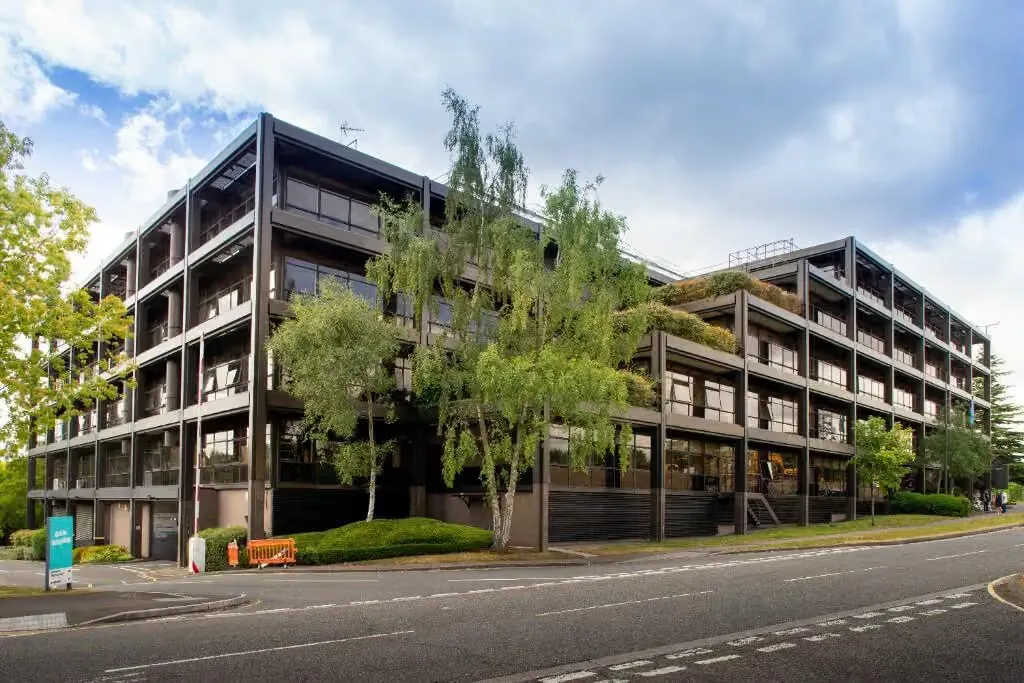
For instance, Office to Let, Basingstoke RG21 at BizSpace offers a five-storey atrium flooding the workspace with natural light and delivering modern, efficient floor plates.
Fit-Out, Category A and Category B
A Category A fit-out means the landlord provides a ceiling, raised floors, and basic finishes like lighting, air conditioning, and toilets , ready for the tenant to tailor.
Category B fit-out refers to the tenant’s customization including partitions, furnishings, branding, and IT infrastructure.
Landlords often offer a fit-out contribution toward the Category B works, negotiated as part of the lease terms to help tenants create a productive environment.
Costs Beyond Rent
Rent is only part of your total cost:
- Business Rates: Depending on property valuation, but small business rate relief might apply.
- Service Charge: Covers maintenance of common areas, security, and cleaning.
- Utilities: Electricity, water, and gas.
- Cleaning: If not included in service charge.
- Insurance: Building and public liability as per lease requirements.
- IT Expenses: Installing and maintaining broadband, phone lines, and network infrastructure.
These extra costs vary by building and lease type and should be budgeted for accordingly.
Viewing Checklist for Office Space
When visiting offices, review:
- Accessibility and parking availability
- Condition of common areas and lifts
- Natural lighting quality
- Floor plate layout suitability
- Availability of meeting and breakout rooms
- Heating, ventilation, and air conditioning effectiveness
- Security systems and access control
- Broadband speed test results onsite
- Building compliance certificates (EPC, fire safety)
- Local amenities proximity
A thorough inspection helps avoid unpleasant surprises after signing.